
Who is Marc Jacobs, and where the story begins
The story opens in New York City in 1963 — Wikipedia lists the date as 9 April 1963 — and everything that came after has been anchored to the city. He came up through Parsons, graduating in 1984. He won the CFDA Perry Ellis Award for New Fashion Talent before he had a company to put it on, and is still its youngest recipient. Two answers, sitting well apart, follow from the question who is Marc Jacobs: a designer with a major award before he had a business, and a business that took another decade to look like marc jacobs purses one. Because a marc jacobs history that confuses the man and the corporate entity gets the dates wrong, the two are kept separate here. Take spelling first: the singular “marc jacob,” is everywhere in search data, but the label has always carried the plural, Jacobs.
1984 to 1986: a partnership, then a name on the label
Every timeline runs into trouble immediately, and the trouble is 1984. The Marc Jacobs brand was founded that year according to the brand’s own history page, and going by that the company marked its fortieth anniversary in 2024. Press accounts go finer: 1984 is the year Jacobs went into business with Robert Duffy as Jacobs Duffy Designs, 1986 is the year the first collection appeared under his own name, and 1993 is the year the licensing company was established. No date in that list contradicts the others; they mark different moments, not rival claims about one. 1986 is the candid starting line for anyone tracing the marc jacobs designer career rather than the corporate entity, since that is when the name went on the clothes. Duffy’s role here is easy to underplay and should not be, because the partnership rather than the solo talent is what survived the decade that followed.
1988 to 1993: Perry Ellis and the grunge collection
Jacobs joined Perry Ellis in 1988, taking charge of an established American sportswear house instead of building another one. The collection his early career is still measured against came in November 1992: a grunge collection for Spring 1993, thrift-store shapes and flannel sold at designer prices. The reaction was loud and badly split, and by early 1993 he had been dismissed. Both years attach to the same clothes because the brand’s own timeline files the episode under 1993 and calls it the Original Grunge Collection — the show was November 1992, the season it was made for was Spring 1993. The house revisited it deliberately in 2018 with what it labels the Grunge Collection Redux — a company putting back on the thing that got its designer fired. Losing that job is, in hindsight, the point at which the independent label stopped being optional.
1997 to 2013: a decade at Louis Vuitton
Two things happened in 1997, and they are usually told as a single story. The first creative director of Louis Vuitton was Jacobs, and LVMH took a majority stake in his own label — the exact percentage has never been disclosed. At Vuitton he introduced the house’s first ready-to-wear, which turned a leather-goods maker into a full fashion house. He also oversaw the artist collaborations that changed what a luxury handbag could look like: Takashi Murakami, Stephen Sprouse, Richard Prince and Yayoi Kusama. Nicolas Ghesquière succeeded him after a final show for the house in October 2013; sources giving the span as 1997 to 2014 are counting forward to the successor’s debut. The RealReal’s 2026 resale report noted saved searches for marc jacobs louis vuitton up 375% year on year, so appetite for that work has clearly not faded. His first own-name store opened in SoHo in that same year.
2001 to 2020: how the diffusion lines rose and fell
2001 brought Marc by Marc Jacobs, and it did what a diffusion line should, putting the name within reach of people who were never going to buy the runway. It ran until 2015, after that year’s fall and winter collection, and was then folded back into the main line. The criticism is worth quoting because it came from named analysts rather than anonymous chatter. In 2018 the trade title Glossy quoted Luca Solca as saying the brand had missed its chance to be a relevant accessible label, and that killing Marc by Marc Jacobs was a mistake; Rony Zeidan, a consultant, said the loss of tiering had cut the brand off at the legs. The answer had two parts: The Marc Jacobs, announced in December 2018 and launched for Pre-Fall 2019 as a more affordable contemporary line, then Heaven by Marc Jacobs, launched in September 2020 under Ava Nirui. The stranger of the pair is Heaven, described by Jacobs as a world within the Marc Jacobs world, and its future is genuinely open since Nirui’s exit was announced in January 2026 with no successor named.
2019 to 2025: The Tote Bag, plus a fortieth anniversary
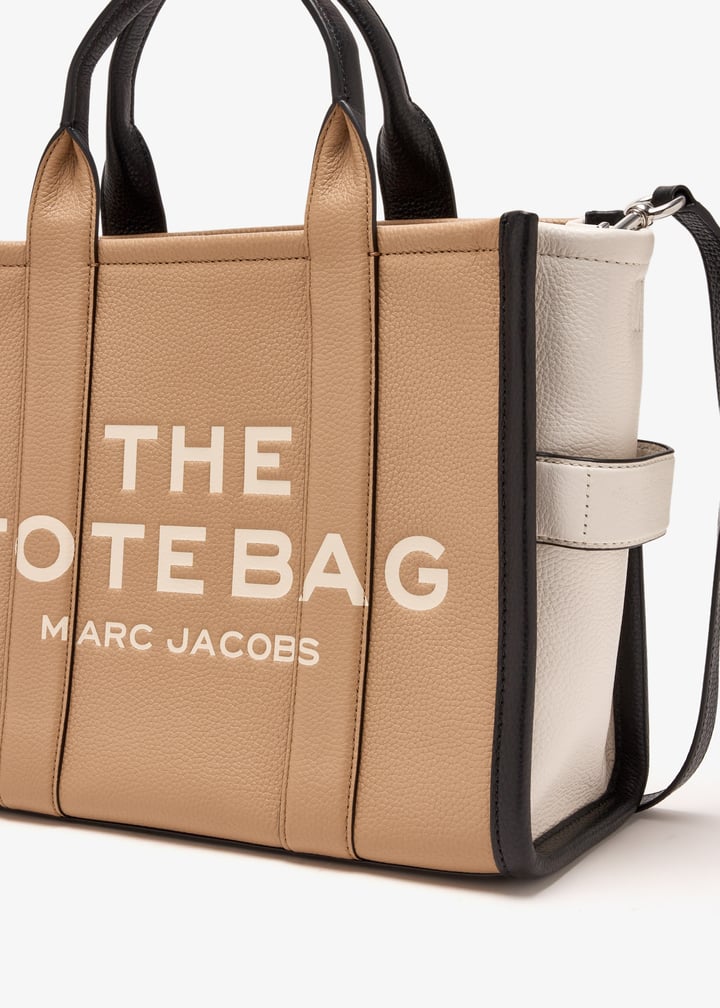
No diffusion label rescued the accessible end of the business; a product did. The Tote Bag went on sale in 2019, drawn from archival designs, and rose to be the house’s best seller largely through TikTok. The company allowed store employees to post from their own accounts, and found the platform returned product insight in three to six days rather than three to six weeks. Jacobs stated the bag’s purpose in the brand’s own copy: “No more Birkins, only Tote Bags,” rejecting exclusivity and elitism in six words. The fortieth anniversary in 2024 was celebrated with collaborations rather than a retrospective: Anna Sui in March, the Stephen Sprouse graffiti tote in June, NIGO in August, Futura in September and Denim Tears in October. In the year 2025 came the JOY artist capsule in September with Derrick Adams, David Shrigley and Hattie Stewart, then a twenty-six-piece October collection with A.P.C. Through all of it the show cadence remained deliberately awkward: roughly once a year, and off the official New York Fashion Week calendar.
2026: when the ownership changed
On 14 May 2026, the announcement came from LVMH and WHP Global of a definitive agreement for the sale of Marc Jacobs. The date of closing was 1 September 2026, with G-III Apparel Group alongside WHP. The structure repays attention: a fifty-fifty joint venture owns the intellectual property, WHP leads licensing, and G-III owns and operates wholesale, retail and e-commerce under a license running to 2041. The total is put at roughly $925 million by press reports, but LVMH disclosed no value, and the number should be read as reported rather than confirmed. His role as Founder and Creative Director continues. The statements issued with the deal carried his words, “forever grateful to Bernard Arnault for his support, belief and trust in me over the last 30 years,” and Arnault’s, calling him a designer of “rare creativity and unique vision,” a warm close to nearly thirty years. There is nothing subtle about the practical consequence: as of September 2026, to call Marc Jacobs an LVMH-owned brand is out of date.
A dated timeline
Because dates in fashion writing drift, and this brand’s drift more than most, the table below pins them down. The company’s own history page is set apart from the press record, because the two do not always agree. Wherever a show and its season differ — the grunge collection above all — it is the date of the show that the table gives. An entry says so whenever its figure is reported rather than officially confirmed. Read it as the skeleton and the sections above as the flesh. Two rows take most of the weight in 2026: the agreement in May and the close in September.
| Date | What happened |
|---|---|
| 1963 | Born in New York City; Wikipedia states 9 April 1963 |
| 1984 | Graduates from Parsons; brand timeline places the founding here; press records Jacobs Duffy Designs with Robert Duffy |
| 1986 | The first collection under his own name |
| 1988 | Joins Perry Ellis |
| November 1992 | Puts on the grunge collection for Spring 1993 |
| Early 1993 | Out at Perry Ellis; licensing company established; brand calls it the 1993 Original Grunge Collection |
| 1997 | Appointed Louis Vuitton’s first creative director; LVMH takes an undisclosed majority stake; first store opens in SoHo |
| 2001 | Launch of the Marc by Marc Jacobs line |
| October 2013 | Closing Louis Vuitton show; Nicolas Ghesquière succeeds him |
| 2015 | Marc by Marc Jacobs discontinued and folded into the main line |
| 2018 | The Grunge Collection Redux |
| 2019 | Pre-Fall launch of The Marc Jacobs; The Tote Bag launches |
| September 2020 | The launch of Heaven by Marc Jacobs under Ava Nirui |
| 2024 | Fortieth anniversary, marked with a year of collaborations |
| 14 May 2026 | The definitive agreement for the sale to WHP Global is announced |
| 1 September 2026 | Sale to WHP Global and G-III Apparel Group closes; press reports about $925 million |